Belgium Fleet Car Wash: Offsetting 2026 EV Tax Hikes
For years, Belgian fleet managers offset the high acquisition costs of battery-electric vehicles (BEVs) through structural tax exemptions that artificially depressed the Total Cost of Ownership (TCO). For newly registered vehicles, those financial levers have evaporated. Facing rising fixed taxation and a locked-in trajectory of diminishing corporate deductibility over the next five years, mobility managers are scrutinizing operational expenditure (OPEX) with renewed intensity.
To compensate for these unavoidable budgetary pressures, traditional decentralized vehicle maintenance protocols are being fundamentally overhauled. By implementing centralized, low-water mobile cleaning contracts directly at the corporate car park, fleets are systematically reducing utility-driven cleaning fees, protecting asset residual values, and preparing vehicles for stricter regional technical inspections.
Key Takeaways
- Exemption status changes: End of the annual road tax (taxe de circulation) and registration tax (TMC) exemptions for newly registered zero-emission vehicles in Flanders, effective 1 January 2026.
- The €107.16 baseline: A new flat annual road tax reality for zero-emission passenger cars registered in Flanders from 1 January 2026, indexed each year on 1 July.
- Deductibility step-down: The progressive erosion of the federal corporate deductibility rate from 2027 to 2031.
- Decoupled utility OPEX: Mobile washing models reduce exposure to volatile municipal water and energy pricing.
- Inspection and range risk: Linking frequent exterior maintenance directly to EV aerodynamic range and inspection compliance.
Why Do the 2026 Tax Changes Force Operational Efficiency?
The macroeconomic shifts in Flemish automotive taxation are forcing a reallocation of fleet management priorities. Because fixed regulatory costs are rising rapidly, OPEX—specifically localized maintenance costs—is now the primary battleground for preserving budget efficiency.
The Immediate Flemish Tax Burden
The catalyst for this operational squeeze materialized at the start of this year. According to the Flemish Government (Vlaanderen.be), since January 1, 2026, the exemption from both the annual road tax (taxe de circulation annuelle) and the registration tax (taxe de mise en circulation / TMC) for pure electric and hydrogen vehicles has been officially abolished for new registrations. Vehicles registered in Flanders before 1 January 2026 retain their exemption. Consequently, any zero-emission passenger car registered in Flanders from January 1, 2026 onward pays a flat annual road tax of €107.16 (additional centimes included), indexed each year on 1 July (first indexation on 1 July 2026). In addition, these vehicles are subject to a flat TMC of €61.50 (not indexed). Note that these flat rates do not apply to (articulated) motor vehicles designed for goods transport with a maximum authorised mass exceeding 3.5 tonnes, which follow their own vehicle-category tax regime.While €107.16 per vehicle might appear manageable in isolation, a 500-vehicle fleet paying this per vehicle faces roughly €53,580 in new annual road tax. Mobile contract pricing must therefore be compared as a predictable per-vehicle-per-month line item to absorb this shock.
The Impending Deductibility Step-Down
Compounding this immediate tax hike is the medium-term erosion of corporate deductibility for electric fleets. As established by federal fiscal policy tracked by FEBIAC, for electric vehicles ordered in 2026, the deductibility rate remains at 100%. For electric vehicles ordered in 2027, the deductibility rate will drop to 95%. This cascades downward in a steep reduction:- 2028: Deductibility falls to 90%
- 2029: Deductibility drops to 82.5%
- 2030: Deductibility reaches 75%
- 2031: Deductibility bottoms out at 67.5%
What is the Hidden Drain of Decentralized Fleet Washing?
Historically, fleet car washing in Belgium relied on a decentralized model. Employees were issued charge cards with integrated car wash budgets, allowing them to clean their vehicles at public tunnel washes, a segment where automatic car wash systems held a major share of the European market. This model is rapidly becoming a financial liability due to shifting European market dynamics.
The Impact of Volatile Utility Costs
Public car washes operate on tight margins dependent on industrial resource pricing. According to a Europe Car Wash Market report by Mordor Intelligence, volatile utility costs—specifically water and energy—act as a major restraint, estimated to shave 0.9 percentage points off European car wash market growth. This negative impact is acutely relevant in the medium term (two to four years) for countries heavily exposed to energy fluctuations, including Belgium, the Netherlands, and Germany.While larger car wash chains can manage their exposure through strategies such as fixed-price power contracts or on-site solar solutions, independent businesses face volatile spot prices that significantly impact profitability. Compounding this pressure is the high upfront capital expenditure (CAPEX) required for traditional tunnel systems, which places an estimated -0.7% drag on the European market CAGR. Because these systems demand a much higher investment than manual bays, the return on investment period is lengthened for independent operators. As Belgian tunnel operators absorb these utility and infrastructure spikes, the per-wash cost for decentralized fleet cards is subject to upward pressure. Furthermore, traditional car washes utilize immense volumes of municipal water, tying corporate OPEX directly to unpredictable water treatment and supply costs.
The Shift Toward Managed Solutions
While individual consumers have historically accounted for the majority of the European car wash market, industry reports indicate fleet operators are now a rapidly growing end-user segment. Relying on employees to manage vehicle cleanliness off-site incurs hidden costs beyond the wash ticket itself: travel time, queuing at the facility, and lost productivity. To manage these TCO hikes, managers require a predictable alternative.How Are Centralized Mobile Cleaning Contracts Rising in Demand?
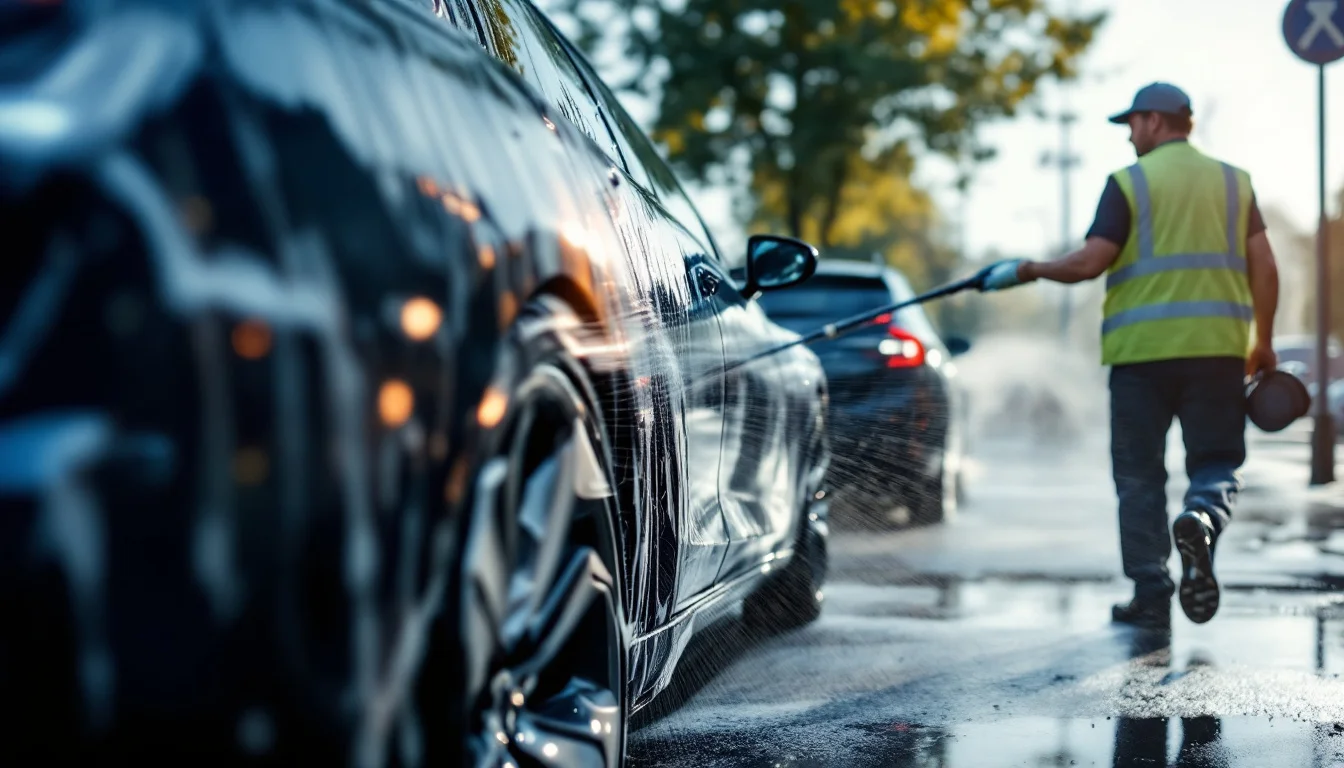
To counteract rising utility-driven wash prices and lost billable employee hours, Belgian fleets are adopting centralized mobile cleaning contracts. Instead of sending the vehicle to the infrastructure, the infrastructure comes directly to the vehicle.
Operational Mechanics at the Car Park
Specialist mobile providers have engineered operational models designed for corporate environments. Clean Power Cars, for example, states it offers a mobile car wash service that deploys directly to the company car park to clean the vehicle fleet. In this model, specialized staff clean each car by hand, utilizing independent on-board equipment and professional-grade products. Their detailed fleet service also includes thoroughly cleaning the vehicle's ventilation system, and they purposefully choose acid-free products that protect both the vehicle's bodywork and the surrounding environment.Fleet cleaning can be scheduled before, during or after office hours, transforming lost transit time into uninterrupted productivity. While on-site cleaning offers predictability, fleet managers must weigh on-site space availability and acknowledge that extremely heavy winter soiling may still require occasional tunnel washes.
Low-Water and Steam Technologies
Mobile contracts bypass volatile utility costs by drastically reducing resource consumption. Clean Power notes its steam-based technique uses a maximum of 3 litres of water per vehicle. By utilizing significantly less water, a large fleet can be maintained without triggering high water consumption metrics or local wastewater drainage tariffs associated with decentralized public washing. Decoupling from grid utility pricing stabilizes the cleaning budget, providing a more reliable OPEX structure.How Does Mobile Cleaning Impact Residual Value and Technical Inspections?
Viewing fleet washing solely as an aesthetic perk is a management error. Mobile car washing also functions as a vital pre-inspection and aerodynamic maintenance tool.
Aerodynamics and Battery Efficiency
Battery-electric vehicles are prompting more frequent car washes specifically to maintain their aerodynamic range. Accumulations of dirt, mud, and road salt can marginally increase surface roughness on the vehicle's body. Frequent hand washing helps ensure that aerodynamic efficiency remains optimal, protecting the vehicle's effective range and reducing charging frequency.Aging Fleets and Residual Value Protection
Maintaining physical integrity is a primary defense against lease-end penalties. According to 2023 data cited by Mordor Intelligence, Europe counted roughly 249 million passenger cars, reaching an average age of 12.5 years. Mordor Intelligence notes this aging dynamic elevates maintenance spend on exterior cleaning as operators attempt to protect residual value.Preventative Maintenance Checks
Centralized mobile washing can act as a frontline defense against regulatory downtime. Mobile wash providers seamlessly integrate basic preventative maintenance into their cleaning routines. For instance, the mobile cleaning team at Clean Power notes that it can check tyre pressure and top up windscreen washer fluid during its visit. Maintaining correct tyre pressure reduces rolling resistance—further aiding EV range—and ensuring fluid levels are compliant prevents unnecessary administrative failures during technical inspections.Note also that a biennial technical inspection applies progressively since September 1, 2024 for the newest passenger cars, covering all passenger cars in Flanders from September 1, 2026, with the first inspection due at four years from first registration. Keeping vehicles in good external and mechanical condition ahead of each biennial inspection window therefore takes on added importance for residual-value management.
Frequently Asked Questions: Managing Car Wash Contracts
What are typical contract and invoicing structures?
Mobile vendors generally offer single, consolidated monthly invoicing, replacing the administrative burden of tracking hundreds of individual decentralized wash cards and simplifying VAT recovery for Belgian fleets. This operational shift reflects a broader market transition toward digital tracking; while cash has traditionally accounted for a significant portion of the European car wash market, corporate-friendly cashless transactions are forecast to grow steadily in the coming years.Are there on-site space or liability considerations?
Yes. Fleet managers must allocate dedicated parking zones for mobile units to operate safely. Vendors carry specific liability insurance for on-site damage, but corporate facility managers should verify terms and space requirements before deployment.Are mobile car washes fully compliant with local environmental wastewater regulations in Flanders?
Because steam-based techniques utilize vastly reduced liquid volumes—often evaporating upon contact—they generate virtually no chemical runoff. This prevents contaminated water from entering municipal storm drains, ensuring the company remains strictly compliant with regional soil and water protection legislation.Conclusion
As the regulatory landscape continues to tighten ahead of the 2030 fiscal milestones, fleet operators must shift their focus to measurable operational outcomes. Success in the first 12 months of transitioning to centralized washing should be evaluated by tracking the cost per vehicle per month, downtime hours recovered, and the reduction in lease-end damage penalties. Approaching the 2027 deductibility step-down, adopting these targeted operational micro-optimizations provides a structured pathway for fleets seeking to manage their escalating fixed costs effectively.
--- This article is for informational purposes only and does not constitute financial advice. Consult a licensed financial advisor before making any investment decisions.