How to Remove Tree Sap and Bird Droppings Without Scratching Your Car: The Chemical Decontamination Guide
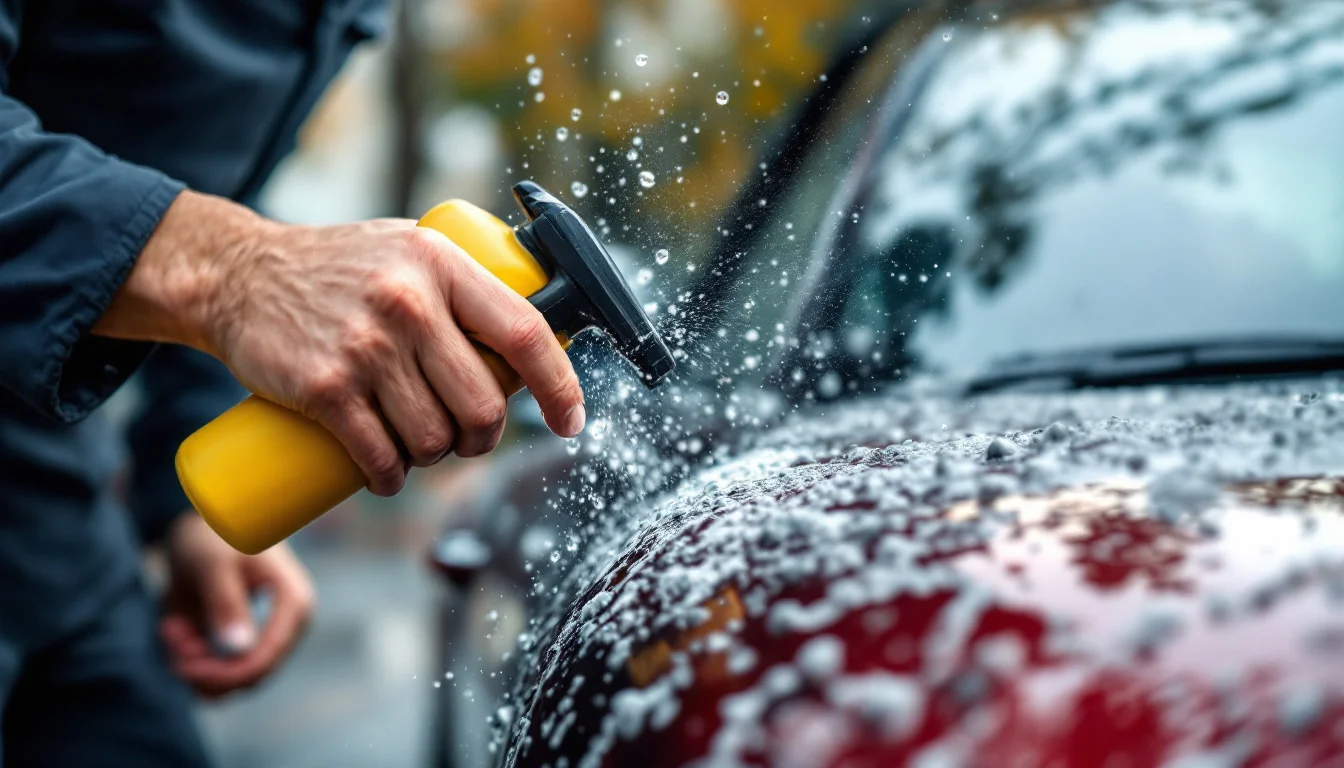
Organic contaminants on a vehicle's exterior represent far more than a simple visual nuisance. Left unattended in direct sunlight, tree sap and bird droppings do not simply sit on paint — they chemically attack and permanently etch the factory clear coat. Vehicle owners often instinctively reach for a rag to aggressively scrub away the blemish, a reaction that predictably introduces micro-abrasions into the finish. Removing these biological hazards safely requires shifting the approach from mechanical force to targeted chemical dissolution.
Key Takeaways
- Hardened tree sap and dried bird waste chemically bond to or etch automotive paint, making standard physical washing ineffective.
- Brute force scrubbing drags abrasive grit across the clear coat, guaranteeing permanent scratches.
- Successful decontamination matches the correct solvent—isopropyl alcohol for resins, diluted vinegar for certain biological deposits—to the specific hazard.
- Chemical interventions can strip or degrade localized paint protection, requiring a follow-up wash and the reapplication of a synthetic sealant or wax.
Why Does Scrubbing Guarantee Scratches? The Chemistry of Paint Damage
Understanding why organic matter damages automotive finishes requires looking at the distinct chemical payloads involved. Bird droppings contain concentrated uric acid with a highly corrosive pH. Tree sap, conversely, ages into a hardened resin that water and standard car shampoo will no longer dissolve.
The Thermal Etching Cycle
Temperature plays a defining role in accelerating this chemical damage. Under direct solar radiation, the clear coat polymer expands and softens around the deposited material. This thermal expansion allows the highly acidic compounds to sink deeper into the paint matrix. As the vehicle cools, the clear coat contracts, actively trapping the acidic waste inside the finish rather than letting it sit safely on top.The Mechanical Hazard
Dried bird droppings contain undigested seeds, gravel and grit that behave like coarse sandpaper when dragged across clear coat, which is why a dry dropping must never be wiped or scraped. Similarly, once sap hardens it becomes nearly impossible to remove without a solvent or mechanical action, and mechanical action without a lubricant almost guarantees a scratch. Removal must rely on chemical dissolution rather than physical force.What is the Chemical Dissolution Method for Tree Sap?
Because tree sap acts as a natural resin that cures into a hard, crystalline bond, removing it requires a solvent capable of breaking down hardened resin structures. A safe sap-removal method is to apply 70% isopropyl alcohol, a dedicated bug-and-sap remover, or hand sanitizer to a soft microfiber towel or cotton pad and hold it against the hardened sap for 30 to 60 seconds. This dwell time allows the chemical to penetrate the resin matrix without requiring pressure.
Optimizing Solvent Concentration
Standard 70% isopropyl rubbing alcohol works on fresh sap, but 70% concentration is less effective than 90% or higher. The higher alcohol concentration contains less water, delivering a more potent solvent action against stubborn hydrophobic resins. Regardless of the concentration, most fresh tree sap lifts within two to three applications of isopropyl alcohol.Tackling Hardened Resins
For older, hardened sap, dedicated automotive sap removers such as Turtle Wax Bug and Tar Remover or Goo Gone Automotive are recommended. These formulated products are designed to break down aged resins safely. Fingernails, abrasive sponges and dry paper towels should never be used to scrub tree sap or bird droppings off paint. The friction will not cleanly shear the sap from the surface; it will only fracture the clear coat.How Do You Hydrate and Neutralize Bird Droppings?
Unlike sap, which requires a solvent to dissolve resins, bird dropping removal centers on rehydrating dried waste before lifting it away from the surface.
For fresh contamination, a diluted solution of distilled white vinegar and water at a 1:3 ratio can be sprayed on fresh bird droppings, left for one to two minutes, blotted (not wiped) with a damp microfiber cloth, then rinsed and dried with a second cloth.
Managing Baked-On Contamination
For dried or baked-on droppings, a small amount of WD-40 or a specific enzyme-based cleaner is applied directly to the dropping, covered with a damp warm cloth for five minutes, then lifted with gentle, linear motions of a fresh microfiber cloth.The Pinch and Lift Technique
However, to ensure zero grit is dragged across the finish, the physical removal motion must be strictly controlled. Instead of wiping across the panel, employ a vertical "pinch and lift" motion. Compress the damp cloth directly over the rehydrated dropping, pinch the material upward into the towel, and lift it entirely off the paint. This traps any undigested seeds and gravel inside the microfiber pile, keeping them away from the clear coat.Which Cleaning Products Damage Clear Coat and Should Be Avoided?
Vehicle owners frequently turn to household chemicals when standard car wash soap fails. Many of these improvised solutions cause irreversible chemical damage to automotive paint systems.
Products That Work vs. Products to Avoid
| Chemical Agent | Safety Verdict | Impact on Clear Coat | Target Contaminant |
|---|---|---|---|
| Acetone (Nail Polish Remover) | Dangerous | Acetone will strip automotive clear coat in seconds and should be avoided entirely, despite being commonly suggested on online forums as a fast fix for sap. | None (Destructive) |
| Household Glass Cleaner | Harmful | Many formulas contain ammonia that degrades paint sealants and is not safe for use on automotive paint. | None (Harmful) |
| Isopropyl Alcohol (90%) | Safe | Highly effective solvent. Leaves clear coat structurally intact when used as directed. | Tree Sap |
| Diluted Vinegar (1:3) | Use with caution | Suitable for fresh bird droppings at the recommended dilution; do not use undiluted on clear coat. | Bird Droppings |
How Do You Perform a Scratch-Free Wash After Decontamination?
Solvent cleaners strip away or degrade protective waxes and sealants, so the treated area must be washed and re-sealed with wax or sealant afterwards. Relying on commercial washing facilities to handle this is a mistake. Standard automated tunnel washes rarely remove hardened sap and may leave bird dropping residue, because their brushes and rinse cycles are designed for loose dirt and road grime, not chemically bonded contaminants.
The Mechanics of Wash Damage
A significant amount of swirl marks, scratches, and surface marring is caused not by road debris or stone chips but by incorrect washing. Using automatic car washes with rotating brushes, dragging a dirty sponge across panels, re-using a mitt rinsed in the wash bucket, and washing in full afternoon sun create micro-abrasions that build up into dull, cobweb-like scratches; once present, the only way to remove them is machine polishing.The Dual-Bucket Methodology
The safe wash process requires two buckets — one for shampoo solution and one for rinsing the mitt — with grit guards in both buckets recommended to trap dirt at the bottom. A snow foam pre-wash is not essential but strongly recommended, because it removes the bulk of loose dirt before the mitt touches the panel. Most snow foams work well when diluted in the lance bottle according to the manufacturer's specific guidelines. Snow foam should be allowed to dwell on the vehicle for 3–5 minutes before being rinsed off. Without a pressure washer, a thorough rinse with a garden hose on full pressure, starting at the roof and working down, removes loose contamination effectively.Finally, a quality microfiber wash mitt is the single most important upgrade from a traditional sponge, and a sponge should never be used on paint. Once the vehicle is completely clean, apply a high-quality synthetic sealant or wax to the areas previously treated with solvents to restore the protective barrier.
When Should You Call a Professional for Permanent Paint Damage?
Chemical decontamination has limits. When acidic waste or dense resins have compromised the paint matrix beyond the surface level, chemical solvents will no longer reverse the damage.
The DIY vs. Detailer Escalation Matrix
Professional detailing help is advised when:- Sap has been on the paint more than two weeks and has fully hardened.
- Bird dropping etching is obvious and does not improve after cleaning.
- Swirl marks or scratches appear during DIY attempts.
- The affected area is larger than a palm.
Correction and Protection Strategies
For already-etched clear coat, light hand polishing with a fine finishing polish on a microfiber applicator, worked in straight overlapping lines with moderate pressure, can restore clarity. This process gently levels the microscopic ridges of the chemical etch. However, a highly abrasive rubbing compound should only be used as a last resort; applied incorrectly it removes too much clear coat and causes more damage than the sap itself.Once the clear coat is fully decontaminated and corrected, long-term barrier protection is highly recommended. A ceramic coating applied by a certified detailer offers the strongest long-term protection, providing extreme chemical resistance and drastically reducing the severity of future thermal etching.
Conclusion: Chemical Precision Over Mechanical Force
Maintaining flawless automotive paint requires understanding the chemical nature of environmental hazards rather than relying on aggressive scrubbing. By matching precise solvents to specific biological contaminants, vehicle owners can safely break down damaging resins and acids without inducing micro-abrasions. As automotive clear coats continue to evolve, pairing these safe, targeted chemical dissolution techniques with proactive, high-hardness ceramic barriers will remain the most effective strategy to preserve both the integrity and the clarity of the vehicle's finish. However, this dynamic raises an ongoing question for vehicle owners: as environmental hazards become more aggressive and the cost of high-end ceramic coatings remains a consideration, will chemical decontamination remain a viable DIY process, or will it increasingly demand professional intervention to avoid irreversible damage?