The pH Scale and Your Car: Why the Wrong Soap Destroys Paint, Plastics, and Protective Coatings
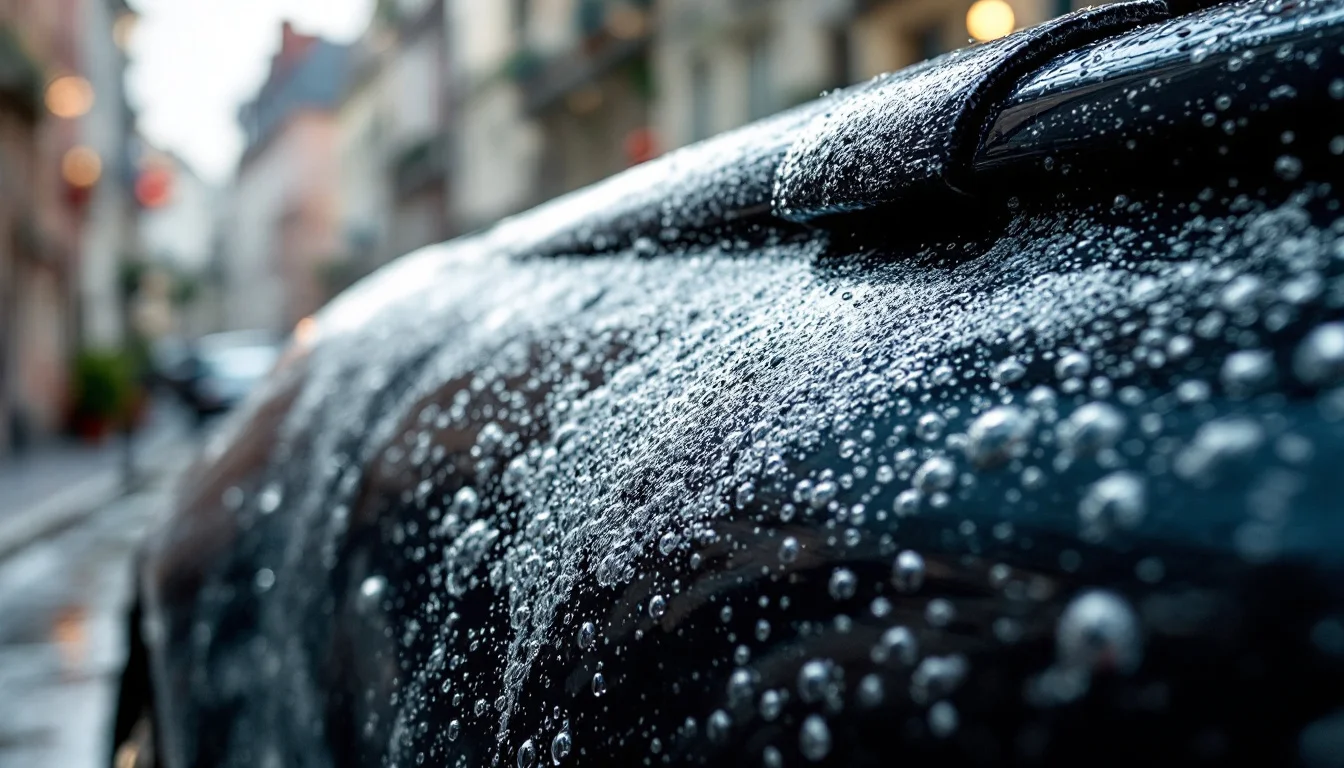
Most automotive paint degradation does not begin with an accidental scrape in a parking lot or a brush against a rough branch. Instead, chemical incompatibility serves as an unseen catalyst for the degradation of factory clear coats, exterior trim, and protective sealants.
When vehicle owners casually grab a bottle of household cleaner from under the kitchen sink, they are often unknowingly initiating a process of progressive chemical weathering on their vehicle's most sensitive materials. According to Ripclean ("The Truth About pH in Car Detailing and What Actually Matters"), a fundamental misunderstanding of detailing chemistry is to blame.
The pH value of a liquid does not inherently determine whether a product is objectively good or bad. Rather, that numerical value strictly determines whether the product is appropriate for the specific job you want done. Applying the wrong chemical formulation to an automotive surface is precisely where long-term, irreversible material damage happens.
Key Takeaways
- Chemical alignment is crucial: The safety of an automotive cleaner depends entirely on matching its formulation to the target surface.
- Strength escalates quickly: Moving from a neutral wash to a high-alkaline household cleaner drastically amplifies chemical aggression against the clear coat.
- Plastics require specific care: Interior and exterior vinyl components contain critical compounds that are degraded by repeated use of strong alkaline cleaners.
- Mechanical technique matters: Even perfectly pH-balanced shampoos fail if single-bucket wash methods reintroduce abrasive dust to the clear coat.
The Logarithmic Trap: Why a 'Small' pH Difference Matters
To understand why certain chemicals degrade automotive finishes, one must first understand how acidity and alkalinity are quantified. In the realm of detailing chemistry, pH measures exactly how acidic or alkaline a given substance is when compared directly to pure water. Pure water sits precisely at the center of the spectrum, registering as neutral at pH 7 (Ripclean, "The Truth About pH in Car Detailing and What Actually Matters").
The Mathematics of Chemical Aggression
Assuming that the numerical intervals on the pH scale are linear can lead to severe detailing mistakes. In reality, the pH scale is strictly logarithmic. This mathematical property means that a formula rated at pH 2 is exactly 10 times more acidic than a formula at pH 3, and a product at pH 3 is 10 times more acidic than one at pH 4.
Consequently, small changes in the displayed number are never small in physical reality. When a vehicle owner switches from a neutral pH 7 car shampoo to a slightly more alkaline household cleaner, they are not making a minor adjustment to their wash routine. Moving from a pH of 7 to a pH of 9 means exposing the vehicle's clear coat to a significantly higher concentration of alkaline ions, which can alter the chemical aggressiveness of the solution depending on its overall formulation. This potential escalation in chemical interaction is what silently breaks down protective barriers and degrades sensitive exterior components.
The Dish Soap Illusion: Why High-Alkaline Cleaners Age Your Car
One of the most persistent and damaging habits in driveway automotive care is the reliance on kitchen detergents. This practice persists due to what can be categorized as the "Dish Soap Illusion." Because these products generate massive amounts of thick foam and easily remove surface dirt, they trick consumers into believing the product is performing safely. However, the chemical reality of these formulas paints a much harsher picture for automotive longevity.
The True Cost of Cutting Grease
A standard liquid dish soap typically registers with an alkaline pH that varies depending on the specific formulation (Ripclean). While it will certainly clean a car, it is fundamentally not designed for one. According to FuelX ("Common Car Washing Mistakes Damage Paint"), dish soap was engineered for one highly specific job: cutting through dense cooking grease on dishes.
Because of the logarithmic nature of the pH scale, applying this formulation to a vehicle strips away protective wax and synthetic sealants, reduces overall gloss with repeated use, and dries out rubber, vinyl, and plastic components over time. Furthermore, this grease-cutting chemistry can break down modern ceramic protection layers on a vehicle (FuelX). Once those sacrificial coatings are stripped away by alkaline detergents, the factory clear coat is left completely bare, forced to deal with harsh environmental contaminants on its own.
Chemical Aging of Automotive Plastics
When evaluating detailing safety, the target surface matters just as much as the pH of the cleaner. Automotive interior vinyl and textured exterior plastics contain complex oil-based components designed to keep the material pliable, dark, and resistant to ultraviolet light. Because strong alkaline solutions can aggressively interact with these materials, repeated use on these surfaces can accelerate the degradation of their internal plasticizers and polymers. This chemical degradation process can directly cause the premature whitening and permanent discoloration frequently seen on older vehicle dashboards and exterior trim (Ripclean).
Mapping the pH Scale to Automotive Detailing
Protecting a vehicle’s finish requires moving away from all-purpose solutions and adopting a targeted chemical approach. By categorizing cleaners strictly by their pH ranges, vehicle owners can match the correct molecular tool to the specific type of contamination they are facing on the paintwork.
The Car Care Chemistry Matrix
| Cleaner Type | Target Contaminant | Recommended Usage & Effect |
|---|---|---|
| Acidic (pH below 7) | Mineral deposits and inorganic fallout | Deployed specifically to work on stubborn contaminants that do not dissolve easily in standard water. |
| Neutral (around pH 7) | Light dust and loose surface dirt | Intended strictly for routine, general maintenance cleaning; these formulas rinse off the panel easier and typically leave less residue behind. |
| Alkaline (pH above 7) | Road film, bug splatter, and food residue | Aimed at targeting organic grime; their chemical purpose is to aggressively break down organic and oily contamination on contact. |
As outlined by Ripclean's detailing analysis, a useful general heuristic in automotive chemistry is that alkaline cleaners typically help break down organic matter, while acidic cleaners are often used to dissolve inorganic matter. Neutral products exist to safely remove unbound dirt without structurally compromising the underlying waxes, sealants, or clear coat. Deviating from this matrix forces the user to rely on excessive mechanical scrubbing to achieve a clean surface, which inevitably leads to physical paint damage.
Beyond Chemistry: Mechanical Safeguards for Your Clear Coat
While maintaining the correct chemical pH is foundational to preserving a vehicle's finish, chemical safety is immediately voided if the physical mechanics of the wash process introduce friction. The interplay between a cleaner's molecular formulation and the physical tools used to agitate it dictates the ultimate safety of the clear coat.
The Importance of Formula Lubricity
Unlike alkaline household detergents, quality car wash soaps are engineered with highly balanced surfactants designed to lift heavy dirt safely away from the surface. More importantly, these dedicated formulas contain advanced lubricants that actively reduce friction during contact washing, alongside surface-friendly properties meant to preserve fragile coatings and factory finishes (Ripclean, "The Truth About pH in Car Detailing and What Actually Matters").
Managing Abrasive Contamination
The physical environment introduces severe risks before a chemical cleaner ever touches the paint. A car that has been sitting outside near a main road for just a few days rapidly collects a microscopic layer of fine, highly abrasive material generated by passing traffic, wind, and airborne dust. Skipping a thorough, high-pressure pre-rinse means that the very first time the soap touches the paint, it does so with all of that sharp contamination still sitting directly on the clear coat, rendering the soap's chemical lubricity useless (FuelX, "Common Car Washing Mistakes Damage Paint").
Wash and Dry Mechanics
Even with adequate pre-rinsing and lubricated soap, amateur bucket protocols frequently cause irreversible micro-scratching. Using only one bucket looks like it should be highly efficient and enough for a standard wash. However, in a single-bucket scenario, the microfiber mitt picks up abrasive dirt from the panel and then goes directly back into the exact same bucket, guaranteeing that grit is transferred back onto the vehicle's paint.
Finally, the physical environment during the drying phase poses a distinct chemical threat. Hard water spots left on automotive paint are not just a cosmetic annoyance. When exposed to strong environmental heat, the concentrated minerals in these spots can bake onto the surface, leaving stubborn deposits and superficial marks on the clear coat that routine pH-neutral washing alone cannot fix (FuelX).
Frequently Asked Questions
Is it ever acceptable to wash a car with dish soap?
While dish soap’s alkalinity will effectively strip away old protective wax and synthetic sealants, it comes with significant drawbacks. The grease-cutting chemistry that removes the old wax will also dry out rubber, vinyl, and plastic components over time by accelerating the degradation of their internal plasticizers and polymers (Ripclean).Why do hard water spots require specialized removal?
Standard neutral car soaps are designed to lift loose dirt without leaving residue, but they cannot dissolve heavy minerals. If left on the paint under strong environmental heat, these concentrated minerals can bake onto the surface, leaving stubborn deposits and superficial marks that routine maintenance washing cannot reverse (FuelX).Does car wash soap protect against scratching?
Yes, provided proper wash methods are used. Purpose-built car soaps feature dedicated chemical lubricants engineered to minimize friction during the physical contact phase of the wash. However, this protection is voided if abrasive dirt is reintroduced to the paint via a single-bucket wash method.Conclusion
The evolution of automotive paint technology necessitates a parallel evolution in how vehicles are maintained. As advanced, highly sensitive ceramic coatings and complex synthetic plastics become standard features on modern vehicles, understanding chemical interaction is no longer an optional skill for detailing enthusiasts. Recognizing that different automotive surfaces require specialized care shifts vehicle maintenance from merely scrubbing away visible dirt to actively preserving the long-term structural integrity of the machine's exterior and its delicate protective layers.