Introduction

For decades, vehicle owners faced a frustrating compromise when it came to exterior maintenance. Traditional manual car washes in driveways consumed vast amounts of municipal water, sending untreated chemical runoff directly into local storm drains. Conversely, early iterations of automated car wash systems earned a poor reputation for their impact on vehicle paint. The automotive industry has since witnessed remarkable innovations, fundamentally shifting the paradigm of vehicle care.

The modern automated car wash has engineered out many of these historic compromises through a combination of mechanics and environmental chemistry. Far from being a primary source of water waste, contemporary tunnel systems have evolved into sophisticated detailing facilities.

Today, the integration of textile-felt brush technology and up to 90% closed-loop water recycling has transformed the automated wash into a protective choice for vehicle maintenance. This evolution is particularly crucial for drivers facing harsh seasonal conditions, where corrosive winter road salt threatens the structural integrity of the undercarriage. Understanding the mechanics behind these modern washing technologies reveals why the driveway sponge is rapidly becoming less common.

What Are the Key Takeaways?

  • Paint Protection: Modern automated systems utilize soft micro-felt brushes, reducing the friction that causes clear coat scratches.
  • Water Efficiency: Advanced tunnel washes operate on closed-loop systems, recycling up to 90% of their water.
  • Structural Maintenance: Automated washing is critical during winter months, providing the undercarriage access needed to dislodge corrosive road salt.
  • Technological Variety: Car owners now have access to specialized methods, including steam and waterless washing, tailored to specific aesthetic needs.

How Have Car Wash Brushes Evolved to Protect Paint?

The mechanical evolution of the wash tunnel centers primarily on how paint is protected during the friction phase of cleaning. Today, cutting-edge facilities rely on engineered textiles that interact gently with the vehicle’s clear coat.

How Is the Pre-Wash Phase Managed?

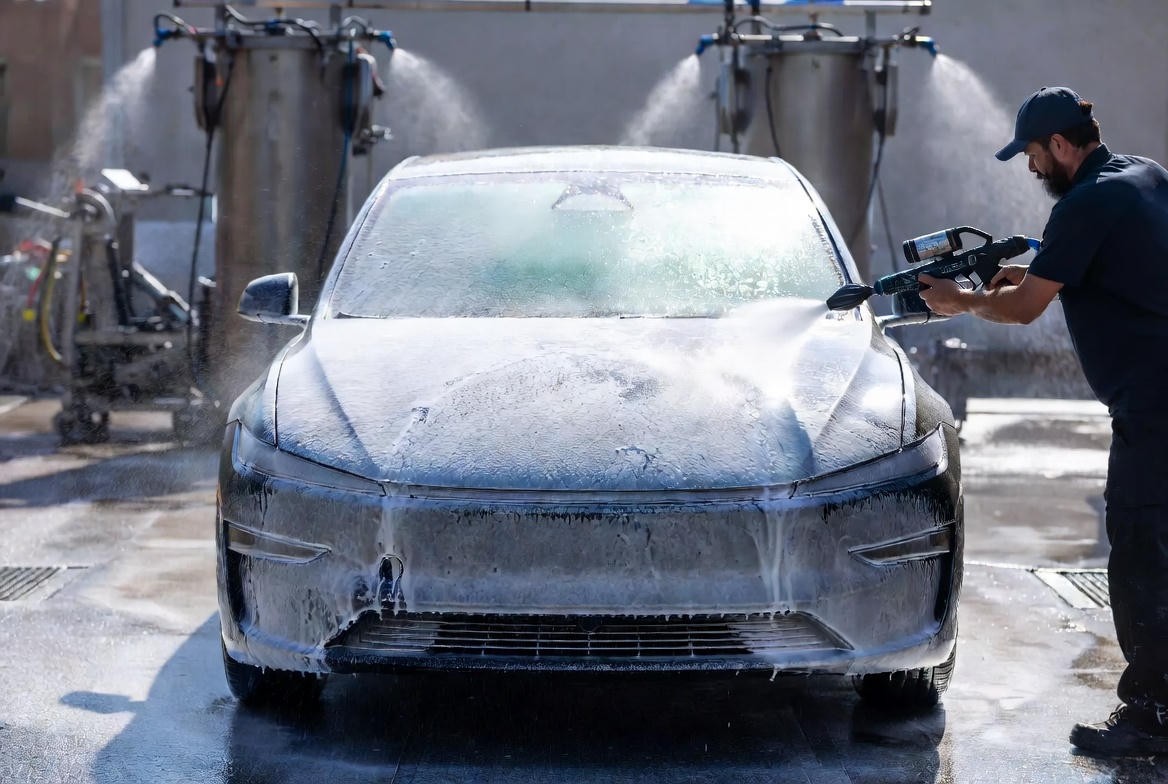
The secret to a safe finish lies in the preparation before any physical brush makes contact with the vehicle. The wash process includes a manual high-pressure pre-wash, automatic spray of degreasing and anti-insect solution, high-pressure total, and soft felt brushes.

Modern facilities like N5 Car Wash feature a tunnel equipped with 12 rotabuses, arranged in two distinct ramps of six professional rotabuses. Combined with high-pressure wheel cleaning mechanisms, this setup ensures that heavy particulate matter is blasted away from the bodywork and alloy wheels.

What is Micro-Felt Innovation?

Once the abrasive dirt is removed, the physical cleaning is handled by soft felt brushes. These materials retain volumes of soapy water, creating a lubricating barrier between the textile and the paint.

The commitment to paint protection extends into the final phase of the tunnel. Drying is performed by a specialized 4-motor blower paired with high-performance textile and microdry felt brushes. This end-to-end approach meticulously preserves the vehicle’s clear coat.

How Do Closed-Loop Systems Impact Water Economics?

The most pervasive criticism of car washing has historically been its environmental impact, specifically regarding water consumption and chemical runoff. According to Favagrossa, washing a vehicle at home with a standard hose can consume upwards of 400 liters of potable water, with the resulting mixture flowing directly into untreated storm drains. The modern automated car wash directly counters this ecological narrative through advanced fluid engineering.

How Does Water Recycling Work?

Contemporary wash tunnels operate on sophisticated fluid management architectures designed to capture, clean, and reuse water continuously. Demonstrating the peak of this specific technology, N5 Car Wash recycles 100% of the water used in its tunnel via a high-performance recycling center.

This closed-loop approach means that the system only requires minimal fresh water to account for evaporation or carryout (the water that physically leaves on the surface of the cleaned cars).

Can Solar Integration Help?

To add further technical depth to this ecological angle, some facilities push beyond basic recycling. N5 Car Wash, for instance, operates a massive 120,000-liter rainwater collection system, drastically reducing its reliance on the municipal water grid even for the fresh water introduced into the wash cycle. Complementing this hydraulic efficiency, the facility utilizes photovoltaic panels to offset the electrical demands of the high-pressure pumps and blowers.

Which Car Wash Technology Suits Your Vehicle?

While the automated tunnel represents an option for daily maintenance, the automotive industry offers numerous methods available for car owners to maintain their vehicles’ cleanliness.

Wash Method Speed Paint Gentleness Water Consumption Chemical Use Best For
Manual (Driveway) Slow Variable (High risk of scratches) High (Often >400L) Unregulated runoff Avoid (Causes local water pollution)
Automated Tunnel Fast Good (Micro-felt technology) Moderate to high Standard regulations Regular maintenance, winter salt removal
Steam Washing Moderate Very High Low None Deep cleaning, engine bays, eco-focus
Waterless Wash Moderate High (With proper technique) Zero High (Specialized lubricating polymers) Lightly soiled vehicles, showroom prep

What Are the Ecological Alternatives?

For unique detailing scenarios, alternative methods have gained traction. Steam washing is an ecological and efficient method using reduced water and no harsh chemicals. Because steam naturally breaks down complex hydrocarbons and lifts contaminants safely, it is gentle on paint and highly effective against ingrained dirt, making it ideal for precision detailing.

Conversely, a waterless car wash relies on specific products—typically high-lubricity polymer sprays—that clean and protect the body without rinsing. This method saves water and provides immediate shine, leaving a thin protective layer behind. However, it is fundamentally designed as an interim solution, ideal only for lightly soiled vehicles.

What Are the Limitations of Automated Car Washes?

While automated tunnels offer speed and structured fluid management, they also present specific limitations. Automated washing facilities typically experience moderate to high water consumption compared to methods like steam or waterless washing, according to comparisons by platforms like AutoScout24. Additionally, operating advanced rotabuses, large blowers, and water recycling centers requires considerable energy, positioning energy consumption as a continuing operational consideration for the industry.

Why Is Undercarriage Cleaning Important During Winter?

Vehicle maintenance is frequently framed as a purely aesthetic chore. However, regular washing is actually critical structural maintenance, particularly when examining the localized threats posed by seasonal weather changes.

What Is the Threat of Road Salt?

In colder climates, the application of road salt and de-icing chemicals creates a highly corrosive environment for automotive metals. If left untreated, this chemical cocktail accelerates rust on brake lines, exhaust systems, and suspension components. Addressing this, AutoScout24 Belgium recommends washing a car every two weeks for standard use, and more frequently in regions with road salt in winter to prevent corrosion.

As AutoScout24 notes, « washing your car regularly preserves its aesthetic appearance, and protects it from damage caused by dirt, dust, bad weather and debris. »

What Are the Limitations of the Driveway Wash?

This seasonal reality exposes a primary failure of manual home washing. A standard garden hose lacks the angled pressure required to effectively reach the deep recesses of a vehicle’s chassis. Furthermore, washing at home in sub-zero temperatures is often physically impractical and causes hazardous ice pooling in residential driveways. Modern automated tunnels solve this seasonal challenge by thoroughly flushing the chassis, neutralizing salt deposits before oxidation can occur.

How Is High-Tech Washing Applied in Practice?

To understand how these technological advancements translate to the consumer market, one can examine facilities operating at the forefront of the industry. In the Charleroi region, N5 Car Wash (located between Gerpinnes and Fleurus) serves as an example of high-tech washing in practice. The wash process includes a manual high-pressure pre-wash, automatic spray of degreasing and anti-insect solution, high-pressure total, and soft felt brushes.

Additionally, N5 Car Wash offers 5 self-wash tracks, each equipped with one high-pressure lance with multiple functions (hot water, soap, rinse, wax, osmosed water). The pricing structure remains accessible for local drivers. Their standard ‘Classic’ wash program costs €11.00 (reduced to €10.50 with a privilege card). Upgrading to the ‘Brillance’ tier costs €13.00 (€12.00 with the card), while their most comprehensive package, ‘The Best’, is priced at €15.00 (€14.00 for cardholders).

What Are Frequently Asked Questions About Modern Car Washes?

How is water recycling achieved in a wash tunnel?

Facilities use a multi-stage closed-loop system. The water is heavily filtered and treated through specialized recycling centers before being pumped back to the high-pressure rotabuses and brush jets.

Can waterless wash products replace the automated tunnel entirely?

While excellent for quick touch-ups or removing light dust, waterless products cannot replace the tunnel for heavy-duty cleaning. They lack the ability to flush the undercarriage of corrosive road salt or safely remove heavy mud without risking surface scratches.

What Is the Next Frontier of Vehicle Detailing?

The transformation of the automated car wash into a hub of fluid dynamics and material science is largely complete. However, the industry continues to push the boundaries of vehicle detailing. The next frontier involves the integration of artificial intelligence and machine vision.

Future wash hubs are developing AI-driven optical sensors capable of real-time dirt analysis, adjusting the precise pressure of rotabuses and the rotational speed of micro-felt brushes based on the specific contamination levels of individual body panels. Furthermore, as the automotive market shifts toward electrification, automated washes are evolving into fully autonomous EV charging hubs. Operating on perfectly closed resource loops, these future facilities will simultaneously replenish a vehicle’s battery and restore its clear coat.

Partager sur les reséaux sociaux

Votre adresse e-mail ne sera pas publiée. Les champs obligatoires sont indiqués avec *

Articles connexes